
Doomsday Conservatism
Posted on | June 12, 2013 | No Comments
This is the best case of a “blind squirrel finding a nut every once in a while” analogy as I’ve seen in a book. John Derbyshire, conservative atheist that he is, finds more than a few nuts in his book, We Are Doomed, an effort to “reclaim conservative pessimism.” He correctly identifies many problems that Americans, and more specifically Republicans, have created in our attempt to ignore reality and push a blindly optimistic, pro-America agenda. And while I don’t agree with much that Derbyshire lays out here (for instance, he has a kooky and largely unhelpful chapter on human nature and psychology), there’s too much solid cultural critique to ignore.
Below is a collection of some of my favorite quotes. And these are just a few of them – I left out the ones that require greater context to understand and appreciate. But hopefully there’s enough here to give you an idea of the value of this book and convince you to pick up a copy the next time you get a chance. (Quotes in bold are personal favorites.)
-
On Diversity:
- “The present-day cult of Diversity of course encompasses much more than race and ethnicity. Feminists, Muslims, homosexuals, the disabled, the obese, and a host of lesser identities also clamor for the attentions of the diversity managers.”
- Quoting Samuel Huntington, “The [American philosophical-Constitutional] Creed is unlikely to retain its salience if Americans abandon the Anglo-Protestant culture in which it has been rooted. A multi-cultural America will, in time, become a multicreedal America, with groups with different cultures espousing distinctive political values and principles rooted in their particular cultures.
- “Having spent his [Robert Putnam] entire professional life in the warm, perfumed soak-bath of political correctness that is the modern American university, he had completely internalized the notion that diversity is a good thing, from which nothing could possibly come.”
- “I want to emphasize the difference between mere diversity – a neutral condition that might be present in any society, and reacted to in all sorts of ways – and the cult of Diversity, the particular way we, present-day Americans, have chosen to deal with our diversity.”
- “As columnist Ilana Mercer noted when remarking on the Putnam study, ‘When an academic ‘discovers’ what ordinary mortals have known for eons, it’s called science.’”
- “The remarkable thing about the Diversity cult is that all the circumstances of the actual human world refute its tenets, wherever we look. I don’t think it’s an exaggeration to say that there has never been an ideology so heartily and jealously embraced by all the main institutions of a society, that was at the same time so obviously at odds with the evidence of our senses. It is as if the entire Western world had committed itself to the belief that human beings can fly by flapping their arms.”
- “Diversity-the-ideology is in fact a very pure example of the kind of magical, counterfactual thinking that has led conservatives astray. By letting this ideology triumph unchallenged – even, in some deplorable cases, embracing it -we have surrendered key political positions: equal treatment under the law, allegiance to one nation, freedom of association, public education in one language… By holding firmly to a pessimistic, realistic view of what is and is not possible in a society of different ethnicities, we might have maintained the principles of a free republic, and saved ourselves much trouble and expense.”
-
On Politics:
- “There is danger from all men. The only maxim of a free government ought to be to trust no man living with power to endanger the public liberty.” – John Adams, 1772
- “We have lost our republican virtue, and shall lose our republic, unless we return to the unillusioned view of human nature subscribed to by the Founders. That view was the common one of their century, a far wiser century than ours. Perhaps never in human history did civilized men expect less of each other.”
- “Prophecies of political doom, like all other considered thoughts about U.S. politics, generally lean to one side or the other: a Hamiltonian doom of presidential Bonapartism, or a Madisonian one of ‘legislative usurpation’ (Federalist 48).”
- “‘Self-government means self-support,’ said Calvin Coolidge. Well guess what: People aren’t all that keen on self-support. Welfare statism has caught the United States in its suffocating embrace, and it is not going to let go. It never has, anywhere.”
- “Our republic began with the Cincinnatus ideal. Government office, even the highest government office, was a service and a sacrifice, not a path to personal enrichment.”
- “In his autobiography, Obama described this one experience of private-sector work as making him feel ‘like a spy behind enemy lines.’
These are our masters: lawyers, bureaucrats, and race hustlers who regard creators of wealth as the enemy. By looking for to much from politics, by putting our optimistic faith in their bogus stories about expertise and competence, in their promises to ‘fix’ things and ‘improve’ things, in their vapid talk of bringing us ‘hope’ and ‘change,’ we have sold our birthright to hacks, frauds, and cynical time-servers – ‘public servants’ who don’t even pay their income taxes. Feugh!” Read more
Tags: Americanism > Conservatism > culture-building > economy > Education > quotes > welfare
Yes, We Are Doomed… But Why?
Posted on | May 16, 2013 | No Comments
The stories making the headlines around the country ought to make Americans pretty ashamed of ourselves. We ought to be humbled by our mistakes and failures. We ought to admit where we have gone wrong and be seeking to right the ship and set sail on a true-er course.
But no, how do we respond? “America is the greatest nation on the earth.” “We’re the last, best hope for mankind.”
We are? Based on what?
I recently picked up John Derbyshire’s book, We Are Doomed: Reclaiming Conservative Pessimism at a Half-Price Books (one of the closest things to heaven this side of the grave). While I do not agree with every aspect of this work, I can whole-heartedly recommend it to any collectivist Democrat or irrationally optimistic Republican. I do so because I agree with his premise – that we are doomed unless we reclaim our conservative pessimism and reject the idea that America is somehow incapable of failure, or without the pandora’s box of evil and foolishness that surrounds us. He hits the nail on the head in that if conservatives had (as you can read on the dust jacket) “held on to their fittingly pessimistic outlook, America’s future would be far brighter.”
Don’t believe me?
Open your eyes. Look around you. Evaluate the cultural trends. What defines our family life, our worship services, our classroom studies, our business environment, our means of entertainment, and our politics?
Allow me to offer my analysis:
“American” families are no more than individuals living under the same roof. They don’t eat together, pray together, work together, or play together. Kids do their own thing, have their own rooms, and have their own agenda. Discipline has taken a permanent leave of absence (for fear of being imprisoned for training your children). “Chores” are forgotten, and kids leave the house after high school with no understanding of responsibility. All this without touching on the huge issue of single-parent families, where one spouse has physically abdicated and abandoned the family.
“American” churches have lost their courage. They no longer teach theology or doctrine, but dwell solely and casually on the message of grace. No law, just grace. Live as you please, just make sure you accept Jesus into your heart; He loves you no matter what you do. No need to actually obey Jesus’ commandments – those are just Old Testament words. That God was mean and strict. We’re under Jesus and His Gospel of grace now.
“American” schools are focused on three things: diversity, equality, and sex education. We’re not interested in quality graduates, just whether or not the ratios are correct and the white and Asian students don’t outperform the black or Hispanic students. And they’re all going to learn what it means to be sexually active whether they like it or not, and whether the parents want it or not. After all, all your kids ARE BELONG TO THE GOVERNMENT. See for yourself:
“American” businesses also must focus heavily on diversity, along with being politically correct. And diversity doesn’t refer only to race in the business world. As Derbyshire points out in his chapter on Diversity:
“The present-day cult of Diversity of course encompasses much more than race and ethnicity. Feminists, Muslims, homosexuals, the disabled, the obese, and a host of lesser identities also clamor for the attentions of the diversity managers.”
And “American” entertainment? Let me suggest that Lady Gaga, Justin Bieber, the Twilight Series, the rap industry, and our fascination with sex and horror is enough to indicate that our entertainment industry has mostly gone down the tubes.
And what of “American” politics? It’s all a sham. A mockery of the leadership that our founders desired to see when they wrote our founding documents.
Once again, I ask you to check the headlines. This isn’t a proud moment for any American. We should all be filled with pessimism as we realize that we are completely worthless as a nation. We haven’t solved any of our problems, and we’ve managed to create many more.
And yet, we still manage to ignore the biggest problem of all. Why do we try to tackle the fringe issues when we’re continuing to miss the underlying problem?
Our founders knew that man was inherently untrustworthy – it’s why they set up a system of government that was divided, creating a separation of powers. We operate under a dramatically different paradigm today, though. We, that is – the American people, believe that all men are good, all things permissible, and that there is no morality that governs us. As a society we deny that there is a God who reigns over creation and over our nation. And if we are Christians and happen to believe in God, we fail to believe and proclaim that God rules over anyone other than ourselves. We practice being nicer than God. We hide Him in the closet – only for us to see. We wouldn’t want the world knowing about Him.
Instead, as a people we proclaim a different Gospel… a different bit of good news: we are the United States of America and we’re here to help you. We’re the last best hope on earth. We’re the greatest nation in history. We are without error. We are gods.
So yes, we are doomed. We are doomed to destruction. We are doomed to fall by the wayside of history, lying in the mud next to Greece, Rome, and England. We are doomed to grovel at the feet of the next superpower.
Why?
Because we have denied God. We have shoved Him out of our homes, churches, schools, businesses, and state halls. If we believe He exists, we limit His authority to only our own life and our own deeds, not to others and their actions.
America is not great. America is not exceptional. Look at the headlines – it’s painful to behold. But God is great and Jesus is exceptional. Faith in God does not involve hiding under a bushel. Shine a light. Shine a light that burns with the Truth of the Gospel. Yes, Jesus saves. And yes, Jesus came to save sinners. But unless we bring Jesus back into our homes, churches, schools, businesses, state and entertainment halls, then we are doomed.
After all, who isn’t doomed without the grace of God?
Tags: Americanism > Christians > Conservatism > culture-building > Jesus > The Church
RPC Update
Posted on | April 27, 2013 | 1 Comment
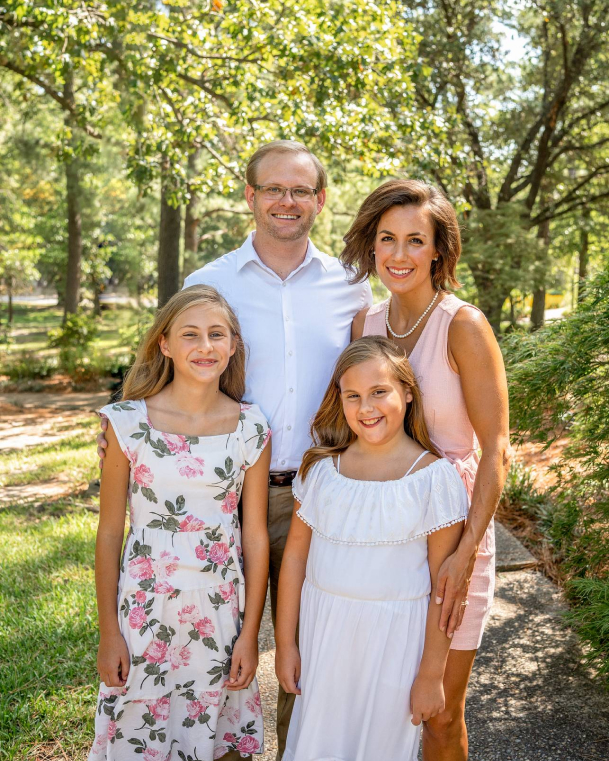
You may have noticed that the RPC website and FB page have seen less activity the last 2-3 weeks. My excuse is that we had the blessing of welcoming our second child – another daughter – into the world on April 16th. The days leading up to and following that joyous occasion have been a blur, and it’s only been the last couple of days that I’ve really been back in the saddle and able to spend some substantial time at my office, handling contracts, doing some reading, and catching up on important news. So I apologize for the hiatus, but plan to keep you busy reading as much material as I can to further educate and inform as to how we as Christians and conservatives can reform our culture, and therefore our politics.
With that in mind, I am happy to announce that the RPC Facebook page passed 100 “Likes” over the last 24 hours! As I’ve mentioned in the past, if you’re interested or like the content you find on this website, you really should be following our FB page, as the majority of the content we recommend is found there. And there are handy links over to the right where you can “Like” the page and/or follow us on Twitter.
As a bit of a Library update, I’m busy trying to finish a couple of books right now, but in my “Must Read Soon” stack I have the following biographies. What have YOU been reading lately?

The Danger of Re-Definition
Posted on | April 6, 2013 | No Comments
One of the major problems with living in a postmodern world is the desire by society to redefine the world. Our 21st century culture has thrown off the chains of definitions, standards, and common practices in order to recast society in a new, liberated light. We have no “traditions,” nor do we want them. We live in the moment, and the moment has no boundaries.
Consider the definition of “definition.” To “define” something is to put it in a box… to “state or describe exactly the nature, scope, or meaning of” something. In other words, when we “define” something, whether it’s an emotion, an expression, an institution, or a way of life, we pigeon-hole it… classifying it as one thing and not the other.
Today’s culture has rejected this notion of “definition.” American society kicks against the goads of both definition and tradition. We deny any need for what is normal, what is accepted, or even what is right and moral. If something goes against the norm, it must be good. After all, it is new, shiny and attractive.
But to quote Shakespeare, “All that glisters is not gold.”
As a 20-something who is not yet five years removed from college, but already has a wife, two kids and a mortgage, I am one of those “young people” who as a whole are fighting to redefine this world we live in. It is my generation which gasps for individual expression and liberty, pushing against tradition and cultural norms. Over the last 20 years, we have witnessed a push to redefine marriage, to redefine sexuality, to redefine the roles of our social institutions, and even to redefine life.
And now, we are beginning to suffer the consequences for our postmodern way of life. Because of the popularity of the murder of the unborn, there are those who would seek to extend our abortive liberties. Why not just end their lives right after? Or for that matter, why not let them live for a year or two to observe their behavior and then terminate the living “organisms” that don’t meet our standards then? Or what about pedophiles, and those who commit sexual crimes? Maybe they were just born that way – they can’t help themselves. What we ought to do is learn to make them comfortable and accepted in society. We won’t judge! Or what about a guy who decides to marry his poodle? Man’s best friend is capable of communicating as well as showing and feeling love and other emotions. Why should we judge them? Let’s marry them at the local Episcopal church!
You might laugh with incredulity at my suggestions, but I warn you – these days are coming, and they’re coming quickly. This is what happens when a society rejects “definition” and “tradition.” This is what happens in an age of REdefinition. If you break down the boundaries on sexuality and life, there is no stopping the slippery slide.
These are the dangers we face living in a 21st century world. These are clear and present dangers, and we who embrace morality and recognize the need for “definition” in culture need to be bold in making a case for it. Do not get me wrong – I am not suggesting that we should assume all traditions are good and beneficial. But a train is freest when it is on the tracks, and there is peace and liberty and joy that is found in societies where boundaries exist. If we don’t want to live in a world where we can murder our children at any age, or smile upon pedophilia, then we need to recover a healthy desire for standards and definitions. And if we want to do it right, let’s recover a desire for God’s standards, in which we can find the ultimate freedom.
The Deep Magic of Death
Posted on | March 29, 2013 | 1 Comment
Today we commemorate the darkness. We remember the Death. We recall the darkest day in world history – the day that sinful men crucified the Son of God not because of any wrongdoing on His part, or some simple misunderstanding, but because mankind reviled the Light and Life of the world.
The crucifixion of our Lord presents the ultimate paradox: it was simultaneously the greatest crime that man could commit, but in that crime was the greatest sacrifice any man could give. Dr. Brian Mattson, of Dead Reckoning TV, pointed out in this week’s episode that Christianity is the only religion that actually takes on the problems of this world and deals with the curse of death. Christianity is the only religion where God enters into the death and darkness and overcomes it and restores His Creation.
This is what CS Lewis refers to as deep magic. There is a “different incantation” … a “magic deeper still.” I can never think of Good Friday without remembering Lewis’ parallel section in The Lion, The Witch, and the Wardrobe:
When once Aslan had been tied (and tied so that he was really a mass of cords) on the flat stone, a hush fell on the crowd. Four Hags, holding four torches, stood at the corners of the Table. The Witch bared her arms as she had bared them the previous night when it had been Edmund instead of Aslan. Then she began to whet her knife. It looked to the children, when the gleam of the torchlight fell on it, as if the knife were made of stone, not of steel, and it was of a strange and evil shape.
At last she drew near. She stood by Aslan’s head. Her face was working and twitching with passion, but his looked up at the sky, still quiet, neither angry nor afraid, but a little sad. Then just before she gave the blow, she stooped down and said in a quivering voice,
“And now, who has won? Fool, did you think that by all this you would save the human traitor? Now I will kill you instead of him as our pact was and so the Deep Magic will be appeased. But when you are dead what will prevent me from killing him as well? And who will take him out of my hand then? Understand that you have given me Narnia forever, you have lost your own life and you have not saved his. In that knowledge, despair and die.”
The children did not see the actual moment of the killing. They couldn’t bear to look and had covered their eyes.
The chorus that the children of men have echoed throughout history is evident in this story as well as in the Crucifixion of Christ. It is the chorus of those who have decided good and evil for themselves and have denied the power and authority of God. It is the verse first sung by Adam and Eve in the Garden, the verse continued by those who built the Tower of Babel, by Pharaoh in Egypt, by the Israelites at the foot of Mt. Sinai under Aaron’s direction. The verses continue, but the theme never changes. Sinful, unregenerate men set themselves up as gods and judges of what is right and what is wrong.
It is in these moments that God sacrifices Himself out of love and mercy. He points to Christ in the Garden. He points to Christ in the person of Abraham, the Father of many nations. He points to Christ in the person of Moses, the one who leads His people out of the wilderness. He points and points to Christ throughout the Old Testament, and then He actually sends His Son – the Christ – the Messiah.
And what does His Son do? He enters the world in a stable – among the stench of cattle and sheep. His family flees to Egypt out of fear for their lives. His ministry is characterized by a life of poverty and humility, without a place to lay His head. His road is difficult and His path to victory unassuming, but His words are powerful. He preaches and teaches us to love our neighbor. He heals the blind and sick. He forgives the unrighteous. And how do we respond?
Dr. Peter Leithart says it well:
Worse, when God the Creator, source of all good and all life, to whom we owe eternal gratitude for our very being, appears in human flesh, we beat Him back with clubs and crosses, until the body of God is a mangled mess. Putting Jesus to death isthe human project. That is what we do. We are far, far worse than we let ourselves imagine.
Left to ourselves, mockery would have the last word. God has a different project, and He won’t let us get away with ours. Matthew’s ironic passion narrative reveals that as well, as all the mockery is turned back on the mockers. Roman soldiers mock Jesus as “King of the Jews,” but as He dies, they confess, without irony, “Truly this was the Son of God” (Matthew 27:54). Soldiers offer Jesus gall and gamble for His clothing at the foot of the cross, but in so doing they are fulfilling prophecies about David’s Son, who is indeed “king of the Jews” (Psalm 22:18; 69:21). Scribes of the law throw words from Psalm 69 at Jesus (Matthew 27:43), entirely unaware that their words position with David’s enemies. At every point, the mockery is turned inside out to become truth.
But God doesn’t simply bypass the human project of mockery and destruction. The gospel does not announce a new divine fiat, “Let there be peace. Let there be justice.” Rather, God enters our story of rage and ruin, offers His cheek to us, and then humbly turns the other cheek, all to invert our project and transfigure it into His. God is not mocked precisely because God has been mocked. Left to ourselves, our contemptuous No to Jesus would be our last word. But for God, Jesus’ cross is the revelation that He is God for us. In, with, and under our No, the Father of Jesus transforms our rejection into His resounding, triumphant Yes.
Yes, today is a day of darkness. Today we fast and pray for those who still suffer under the darkness of death – whether they be friends who have lost loved ones, friends who are suffering from a life-destroying illness, children whose lives were prematurely ended by the slaughter of abortion, or missionaries in the truly darkest part of the world, where the light of the Gospel does not shine brightly. Today we remember that day when there was darkness over the land, when the veil of the temple was torn in two and the earth quaked and rocks were split. Today we remember that Death of deaths, but even in that darkness, we are given a glimpse of light.
“And the graves were opened; and many bodies of the saints who had fallen asleep were raised.”
- Matthew 27:52
Indeed, this is magic. This is magic that is unlike that which King Saul sought after at Endor. This is magic that doesn’t raise illusions of prophets and their spirits, but that raises the dead to actual life. This is magic that uses the ultimate Death to conquer death itself. This is magic that doesn’t end on Good Friday, but looks forward to a day just beyond the horizon – to the rising of the Son. This is Deep Magic, wherein we are able to mourn and pray and fast, but we do so with the true hope of the Gospel.
This is the Magic of the King.
keep looking »
